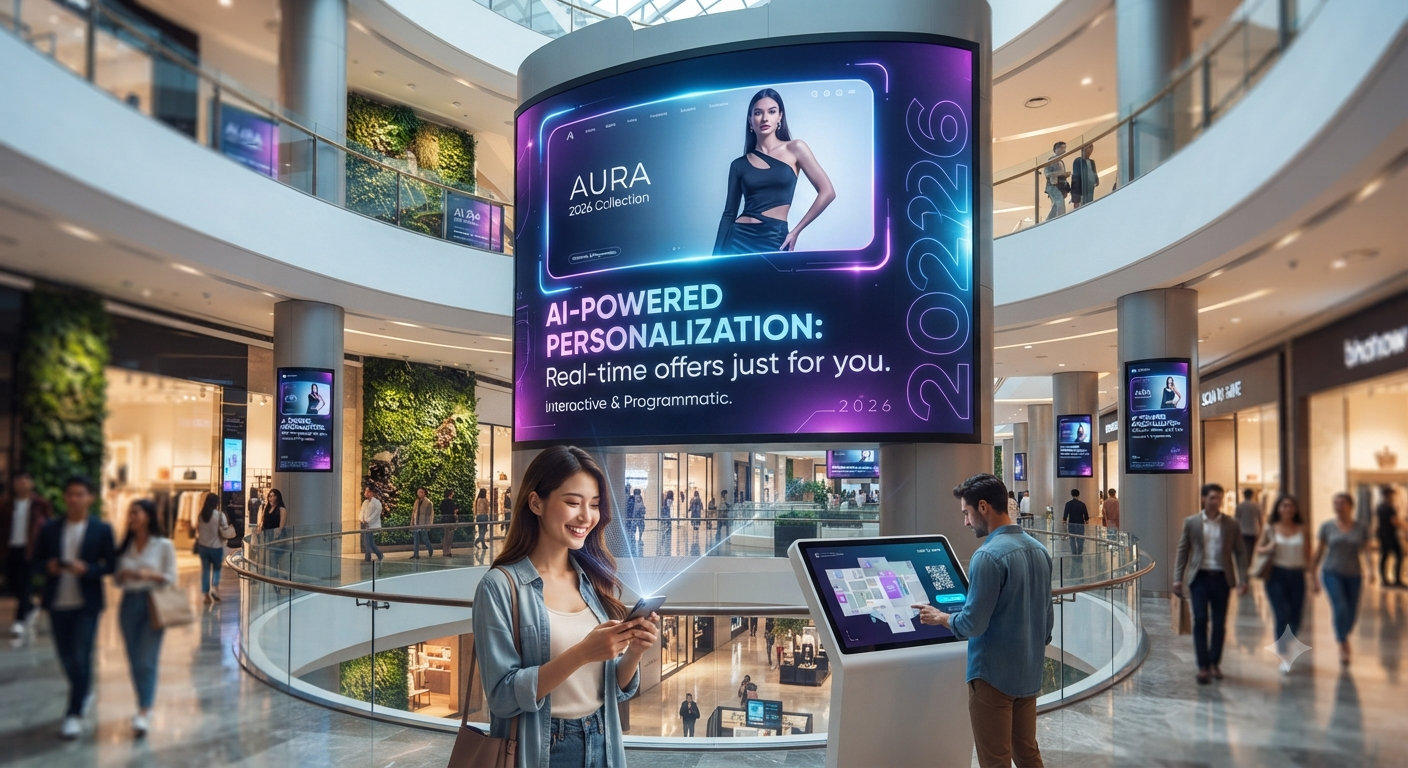
For decades, the “billboard” was a static fixture of the outdoor world. But in 2026, the game has fundamentally changed. The most exciting frontier isn’t on a highway—it’s inside your favorite shopping malls, transit hubs, and corporate lobbies.
Indoor digital billboards have evolved from simple “digital posters” into smart, responsive advertising ecosystems. If you’re still treating indoor screens as passive displays, you’re missing out on the most powerful, data-driven engagement tool of the year.
The “Phygital” Shift: Why 2026 is Different
In 2026, marketing is defined by “phygital” strategies—the seamless blending of the physical environment with digital intelligence. Indoor digital billboards are the anchors of this shift. They are no longer just showing high-resolution images; they are using sensors and real-time data to create personalized moments.
1. AI-Driven Content Personalization
The days of running the same ad on a loop are over. Today, AI handles the heavy lifting, automatically adjusting creatives based on who is standing in front of the screen.
-
Contextual Awareness: Using anonymized sensors, a screen in a mall can detect a surge in foot traffic or specific weather patterns outside and pivot its messaging instantly—like promoting warm lattes during a sudden downpour or sunscreen on a bright afternoon.
-
Generative Speed: AI tools now allow teams to generate fresh, on-brand content in seconds. Whether it’s tweaking a headline or resizing a video for a vertical “TikTok-style” display, content remains consistently relevant without breaking the budget.
2. The Power of “Micro-Moments”
Indoor environments offer a unique advantage: dwell time. Unlike a highway billboard where you have three seconds, an indoor screen in a waiting room or retail aisle has your audience’s attention for much longer.
-
Interactive Kiosks: Modern billboards act as navigators, booking assistants, or product discovery tools. By incorporating touch or gesture controls, brands can move customers from passive observers to active participants.
-
Gamified Engagement: Using QR codes or NFC technology, brands are turning screens into game boards. A quick scan can trigger an AR experience on a user’s phone, offering instant discounts or exclusive content that keeps the brand top-of-mind.
3. Data-Backed ROI
The most common critique of traditional billboards was the “guesswork” involved in measuring success. That’s a relic of the past.
-
Measurable Impact: In 2026, you can track more than just views. By integrating indoor screens with CRM and POS data, brands can see a direct correlation between a screen’s content and in-store sales lift.
-
Programmatic Flexibility: Programmatic DOOH (Digital Out-of-Home) allows brands to bid for ad space in real-time, focusing budgets on the hours, locations, or days where performance is highest.
Best Practices for Your 2026 Strategy
If you’re ready to integrate indoor digital billboards into your marketing mix, follow these golden rules:
“Don’t just sell; help.” The most successful 2026 campaigns highlight a problem the customer has and solve it within the first three seconds.
-
Keep it Omnichannel: Ensure your billboard campaign isn’t an island. It should reinforce the messaging customers see in their search results, social feeds, and email inboxes.
-
Prioritize Legibility: Even with high-tech displays, the core principle of outdoor advertising remains: less is more. Stick to minimalist headlines (2–4 words) and high-contrast, bold visuals.
-
Test and Iterate: Use the flexibility of digital platforms to pilot different headlines or visuals. See what resonates in one location before scaling your winning strategy nationally.
The Bottom Line
Indoor digital billboards are no longer just “rented space”—they are a high-tech layer of the customer experience. By embracing AI, programmatic targeting, and interactive storytelling, your brand can move from being “seen” to being “remembered.”
Are your digital assets ready for the 2026 customer?
Are you currently integrating your physical signage with your digital data, or are you looking for the first step to get started?


